Proposed pack emissions
3,330kg CO₂e for the modelled stages
MewePak Sustainability
Better packaging.
More considered choices.
Thoughtful material choices. Packaging that protects. A clearer view of what happens next.
The bigger picture
What makes packaging
more sustainable?
It starts with a pack that protects what is inside. From there, consider material use, the customer experience and what can happen to the packaging after use.
Environmental goals sit alongside product safety, practical performance and commercial needs. A useful comparison looks at the complete life of the pack.
Explore material routesThinking in circles
Keep value
in the loop.
Circular design asks how a pack can use resources more carefully and fit a realistic route for reuse or recovery. It connects the first material decision with the pack’s next stage.
Build a practical brief- 01Design thoughtfully
Match the pack and material to the product it protects.
- 02Use efficiently
Review size, weight and the role of a refill format.
- 03Plan recovery
Check collection and sorting in the destination market.
- 04Keep learning
Use testing and project data to inform the next brief.
Our approach
Three questions.
A more considered pack.
How much material does the product need? Could a refill format work? What happens after use? Open a pillar to explore the decisions.
Reduce
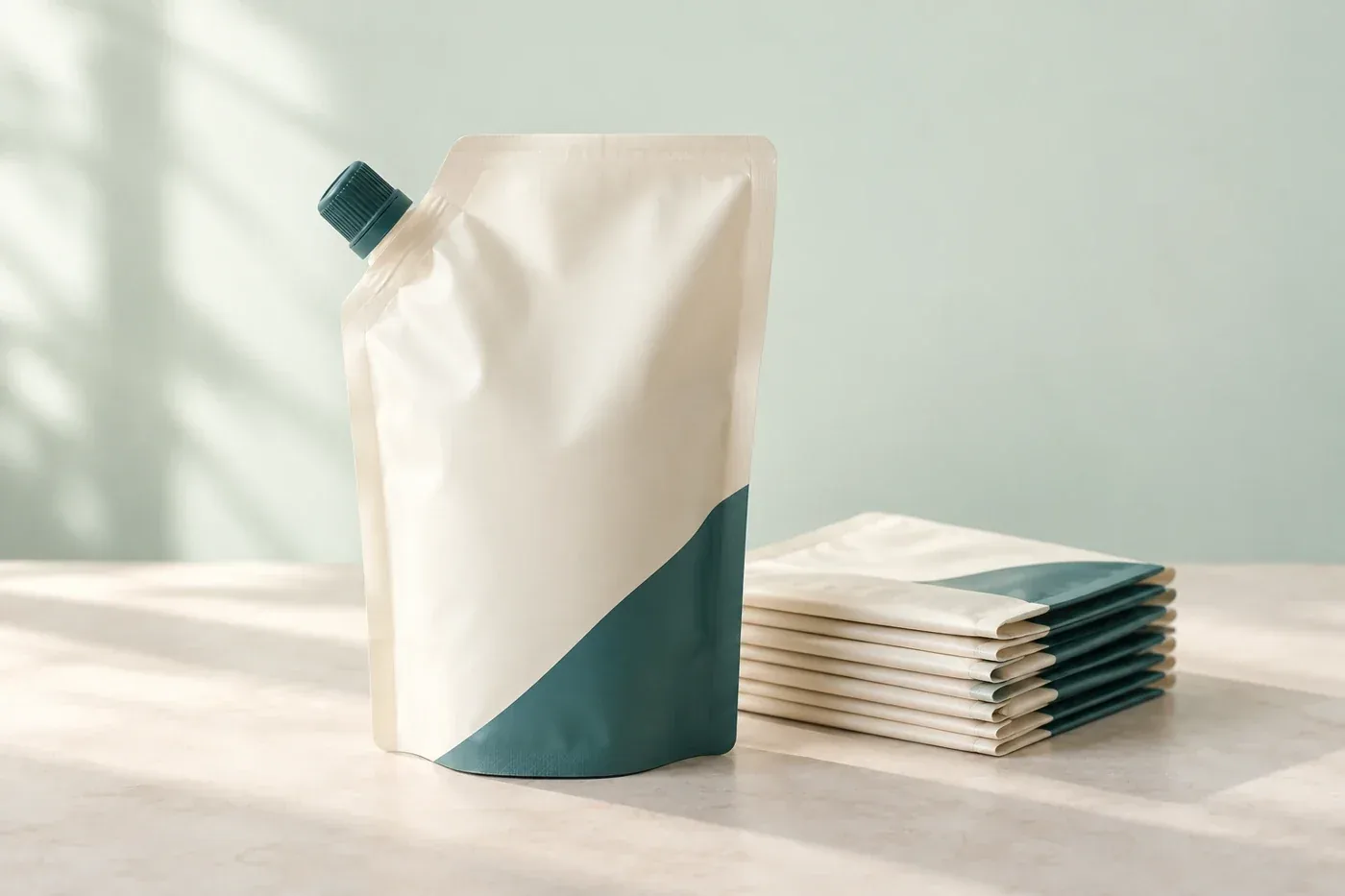
Start with what the product needs.
Review the filled volume, pack dimensions and material structure together. Test a proposed reduction against filling, storage and transport requirements.
Compare packaging formats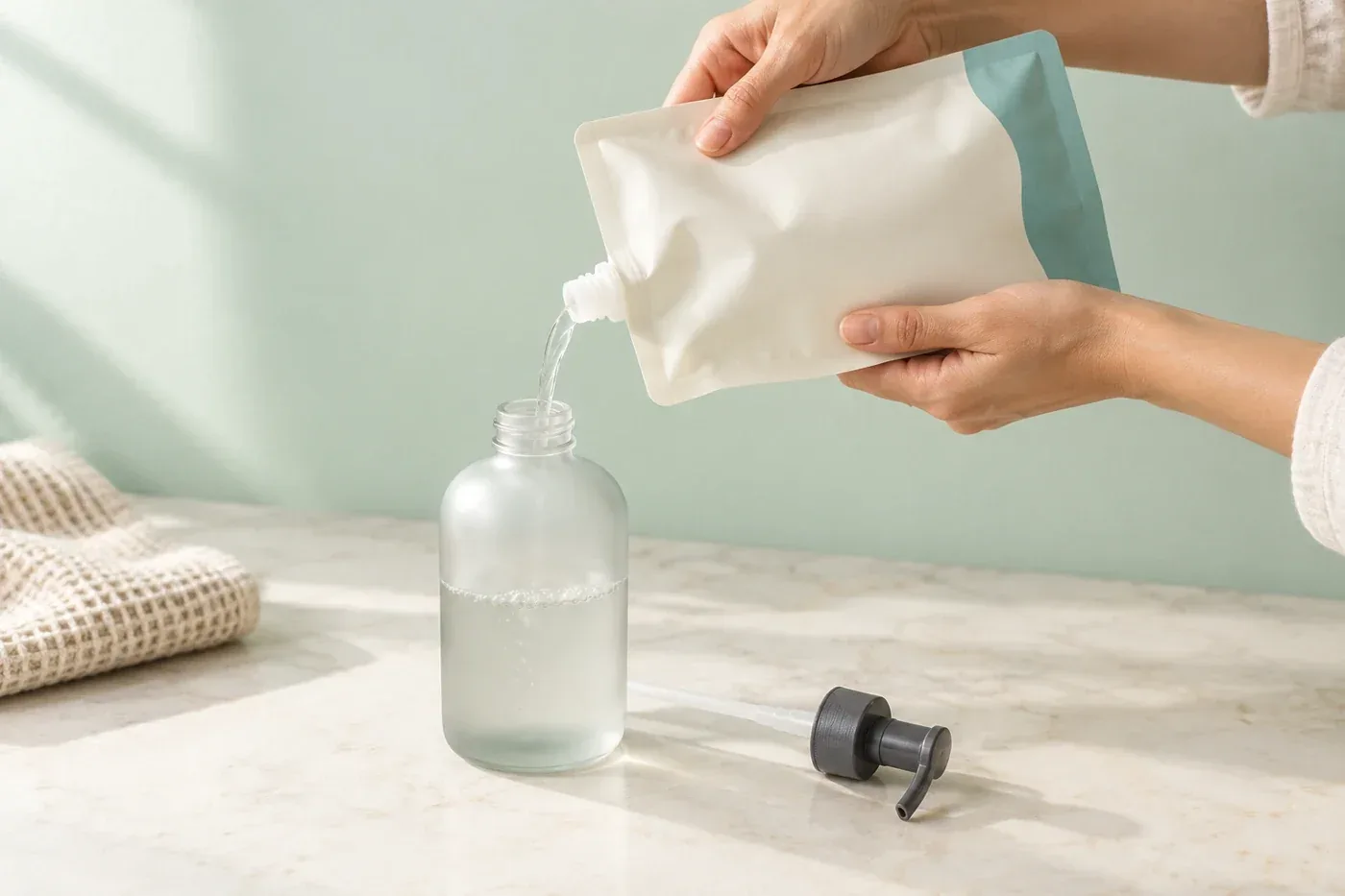
Reuse
Explore how a refill could fit.
Consider a refill pouch where the product and customer routine support keeping a main container in use. Discuss the cap, opening and filling process.
Discuss a refill format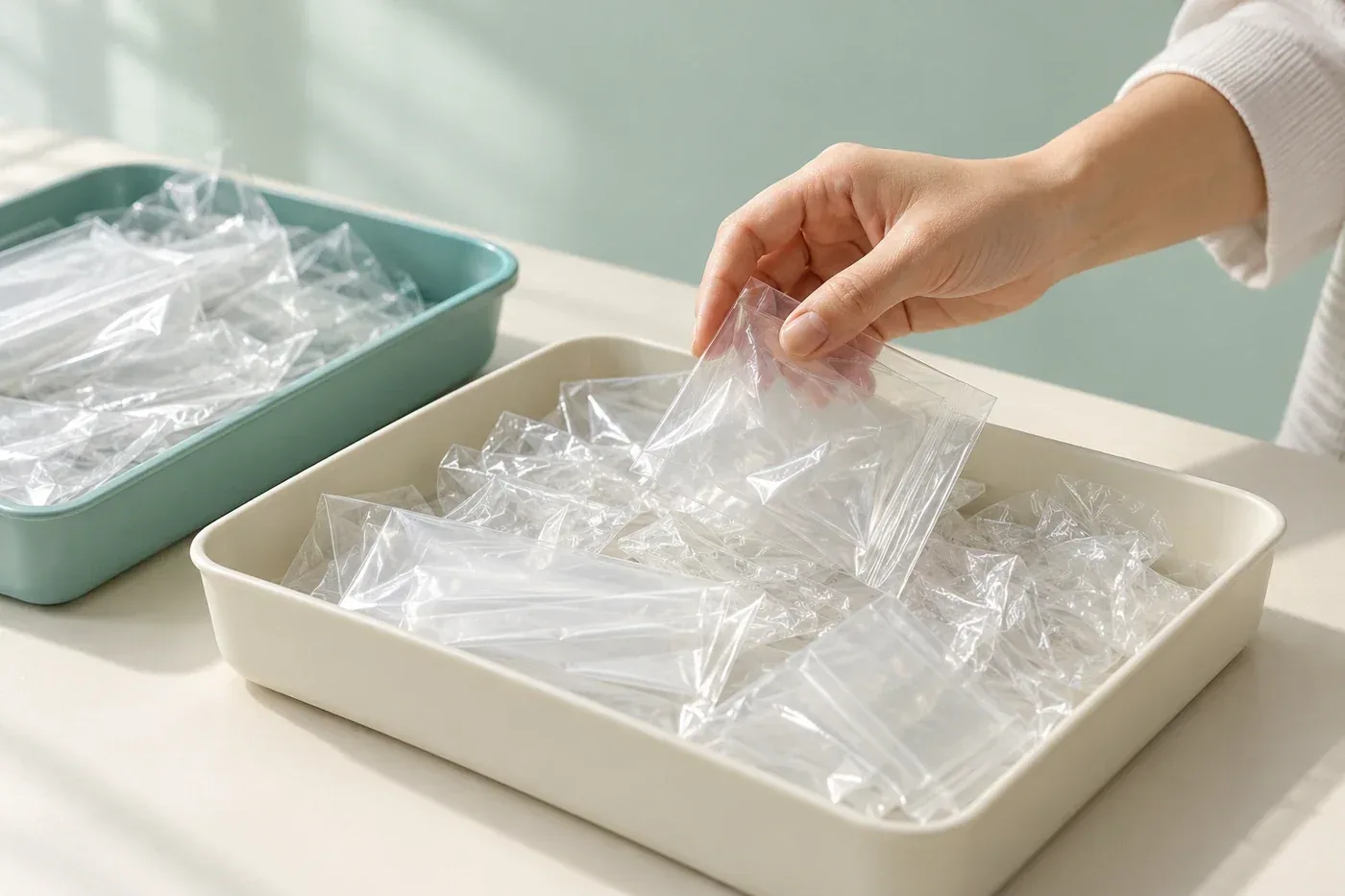
Recycle
Plan for the market where it is used.
Review the complete film and closure construction, then check the collection and recovery options available where the pack will be sold.
Read the Eco Packaging GuidePouch advantages
Small details.
Meaningful possibilities.
A stand-up pouch brings several design choices into one format. Explore the opportunities, then assess them against the pack you use today.
Use material thoughtfully
Compare the weight of the complete pouch with your current pack. Confirm that any reduction still meets handling and protection needs.
Plan for transport
Review empty-pack dimensions, case quantities and pallet layout. Compare freight using the same delivery assumptions.
Protect product quality
Choose a barrier and seal system around the product. Shelf-life testing helps establish how the proposed pack performs.
Make room for your brand
Explore sizes, print finishes and opening features that suit the shelf, the product and the way customers use it.
The appropriate format depends on the product, its protection needs, the supply chain and the recovery systems available in your market.
Material pathways
Three routes.
A product-first decision.
Recyclability, recycled content and compostability answer different questions. Open a route to see what to review for your packaging brief.
Material route / 01Design for recycling
Explore mono-material approaches where the barrier, seals and closures can be designed for a suitable recycling stream.What to review
Project review checklist
- Review the complete pack, including inks, adhesives and closures.
- Check local collection, sorting and reprocessing options.
- Request a recyclability assessment for the proposed specification.
Material route / 02Recycled content (PCR)
Discuss where post-consumer recycled content could fit your application and the requirements of the destination market.What to review
Project review checklist
- Confirm the proposed recycled content and its traceability.
- Review suitability for the intended product and any contact requirements.
- Validate appearance, sealing and barrier performance.
Material route / 03Compostable materials
Consider a compostable structure where the product, certified pack and available disposal route support that choice.What to review
Project review checklist
- Confirm the complete pack’s certification and its scope.
- Distinguish industrial composting from home composting.
- Check that the intended collection and composting system accepts it.
Material availability, certification scope and application suitability are confirmed for the selected specification. Disposal instructions should match the systems available where the pack is sold.
Environmental impact dashboard
See what changes
when the pack changes.
These figures compare two packaging scenarios using the editable inputs in the LCA explorer. The starting example changes pack weight from 12 g to 9 g.
Emissions difference
1,110 lower25% below the baselineProposed packaging mass
900kg of finished packagingPackaging mass difference
300 lighterkg compared with the baselineWhere the modelled emissions sit
Edit the inputsBaseline4,440 kg CO₂e
Proposed3,330 kg CO₂e
- Materials
- Converting
- Freight
- End of life
Illustrative inputs. The comparison assumes the same filled product quantity and protection. Validate the proposed pack and its data for your application.
Sustainable materials gallery
Look beyond
the surface finish.
Explore film finishes and refill concepts, then review the complete structure, closure and local recovery route for your application.
6 examples to explore
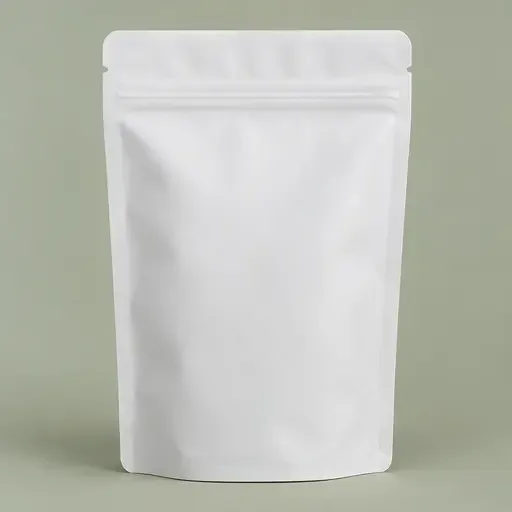 PP finish
White matte BOPP
A white surface with a soft, low-sheen finish.
Ask about the full laminate, seal layer and closure. Review barrier needs and local collection options alongside the appearance.
Explore materials and finishes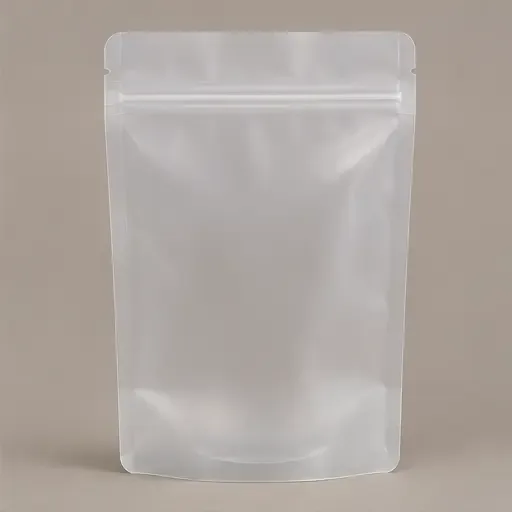 PP finish
Clear matte BOPP
A frosted finish that gives a softer view of the contents.
Ask about the full laminate, seal layer and closure. Review barrier needs and local collection options alongside the appearance.
Explore materials and finishes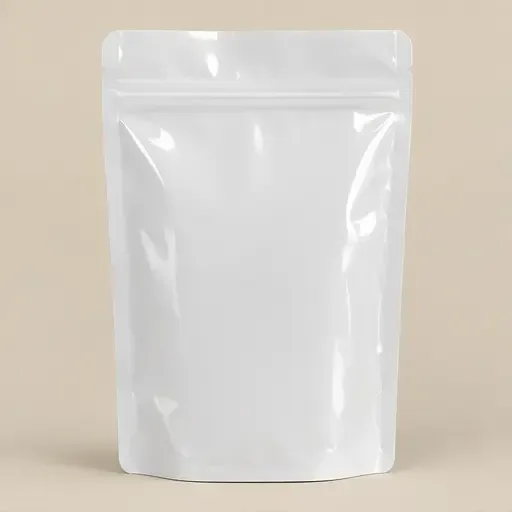 PET finish
White gloss PET
A white surface with a reflective outer finish.
Ask about the full laminate, seal layer and closure. Review barrier needs and local collection options alongside the appearance.
Explore materials and finishes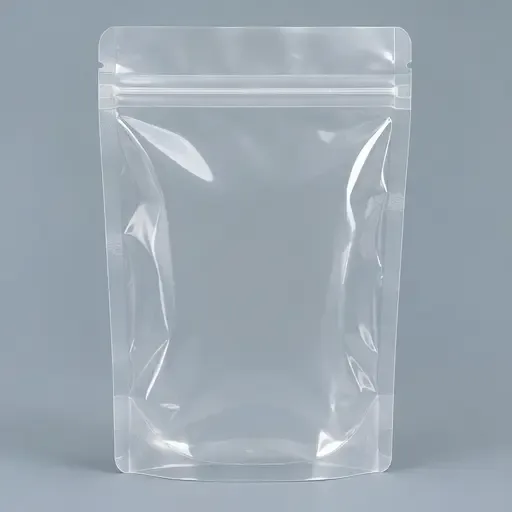 PET finish
Clear gloss PET
A clear, glossy appearance for product visibility.
Ask about the full laminate, seal layer and closure. Review barrier needs and local collection options alongside the appearance.
Explore materials and finishesRefill conceptSpouted refill pouch
A format to discuss for refilling an existing container.
Review the refill routine, spout, cap and filling conditions. The material specification follows the product requirements.
Explore materials and finishes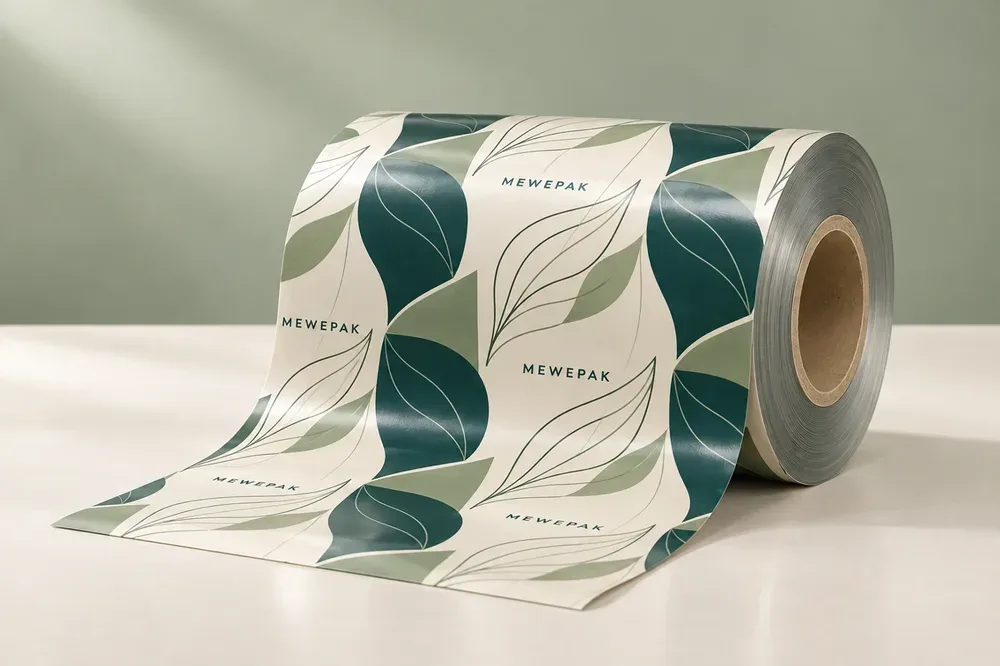 Film format
Printed rollstock
Printed film planned around the filling or wrapping line.
Review reel dimensions, film structure, print coverage and line requirements together when preparing a production brief.
Explore materials and finishesFinishes shown are design examples. Full film construction, performance, availability and recovery options are reviewed for each project.
Performance matters
Good intentions.
Practical questions.
A material change has to work for the product, your operation and the people who use the pack. Bring these questions into the conversation early.
Explore packaging FAQsWill the product stay protected?
Start with moisture, oxygen, light and storage requirements. Compare the proposed structure with the current pack and agree the testing needed to validate shelf life and product quality.
Will it work on our filling line?
Share the equipment, filling conditions, seal settings and line speed requirements. Sample trials can help assess how the selected film or pouch behaves before a production decision.
How will the cost compare?
Compare the complete specification, quantity, artwork and delivery assumptions. Include any changes to filling, storage and handling in the commercial discussion.
How do we support the claim?
Request material specifications, relevant assessment reports and current certificates. Confirm that the evidence covers the complete pack and the market where it will be used.
Vision & strategy
Make the next choice
a measured one.
Our approach connects material selection, pack design and production requirements with the information needed to review the result. Start with a clear goal, compare the options and keep the evidence with your brief.
Compare two packaging scenariosManufacturing process timeline
Consider the details
at every stage.
Use this overview to discuss the production route for your selected material and format.
Prepress
Review the artwork, dieline and panel layout before printing. Build dimensions and print details into the brief.
Extrusion
Discuss film construction and gauge around the handling, filling and protection requirements of the product.
Printing
Confirm the artwork, print coverage and finish for the selected film and packaging format.
Lamination
Consider the complete structure, including the layers and how they support the agreed barrier and sealing requirements.
Slitting
Set reel widths around the agreed format and the requirements of the filling or pouch-making route.
Bag making
Bring the seals, opening and closure details together. Review the finished pack for its intended use.
Certifications & reports
Make room
for the evidence.
Request documents for the proposed film and production route, and keep the assumptions behind a comparison with your project brief.
Know your film structure.
Ask for the complete specification, including barrier, sealing and handling data for your selected material.
Request a specificationCheck scope and validity.
Request current certificates relevant to your product, material and production site, with their scope and validity dates.
Review quality evidenceKeep the comparison.
Export the LCA explorer’s inputs, stage breakdown and assumptions for your packaging discussion.
Open the LCA toolInteractive LCA explorer
Compare two
packaging scenarios.
A screening estimate of packaging mass and climate impact across four stages. Replace the example inputs with data for the two packs you want to compare.
Screening model · Example inputsBoundary covers packaging materials, conversion, freight and end of life. Filling, product losses, consumer use and other environmental impacts need additional study.
Modelled emissions by stage
Order total · kg CO₂e
| Stage | Baseline | Proposed |
|---|---|---|
| Materials | 3,600 | 2,700 |
| Converting | 480 | 360 |
| Freight | 120 | 90 |
| End of life | 240 | 180 |
| Total | 4,440 | 3,330 |
The example uses 25% less packaging mass and the same emissions factors at every stage.
Method, assumptions and reading
Packaging mass is the number of packs multiplied by grams per pack, divided by 1,000. Each stage’s emissions are packaging mass multiplied by its entered factor in kg CO₂e per kg of finished packaging. Stage totals are then added.
Use consistent boundaries, geography, time period and data quality for both packs. Enter each activity in one stage to avoid double counting. Factors here represent gross emissions. Document any recovery credits and additional impacts in a project assessment.
The default factors are illustrative values for exploring the tool. A full LCA requires a defined goal and scope, inventory data, impact assessment and interpretation.
Your next packaging project
Need advice on
a better pack?
Let’s turn your product needs and sustainability ambitions into a clear packaging brief.
- Review your current pack
- Explore materials and sample options
- Agree the next steps for your project