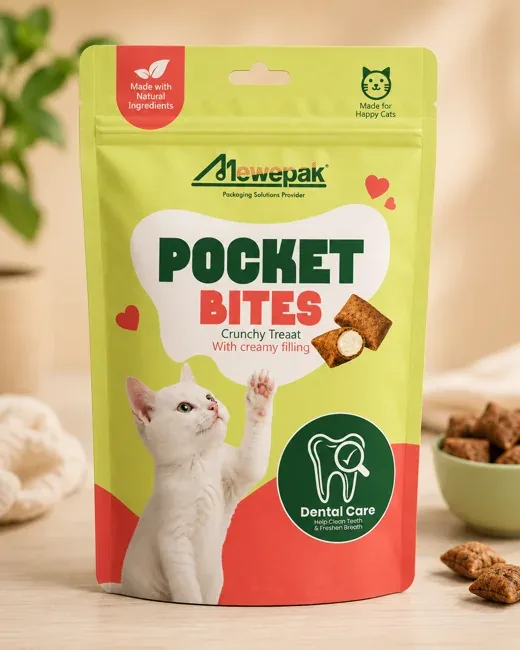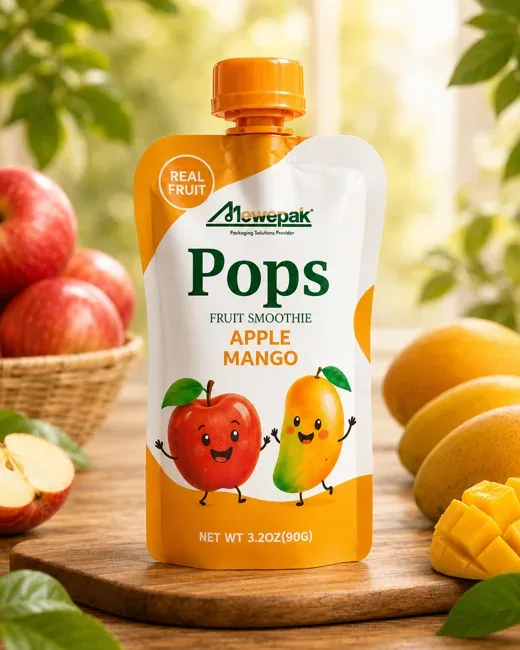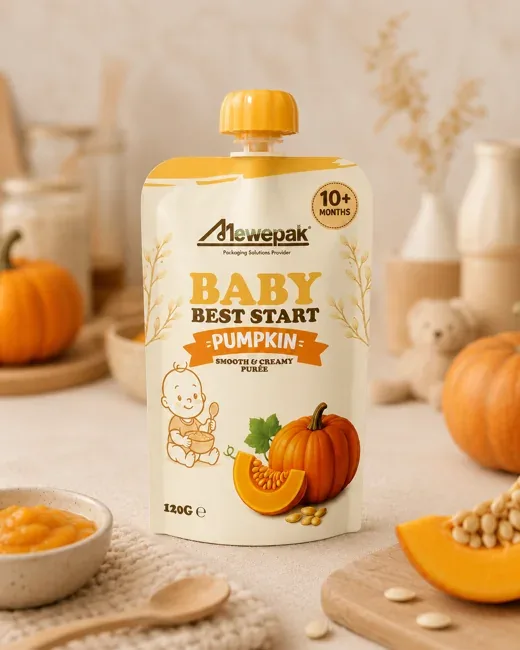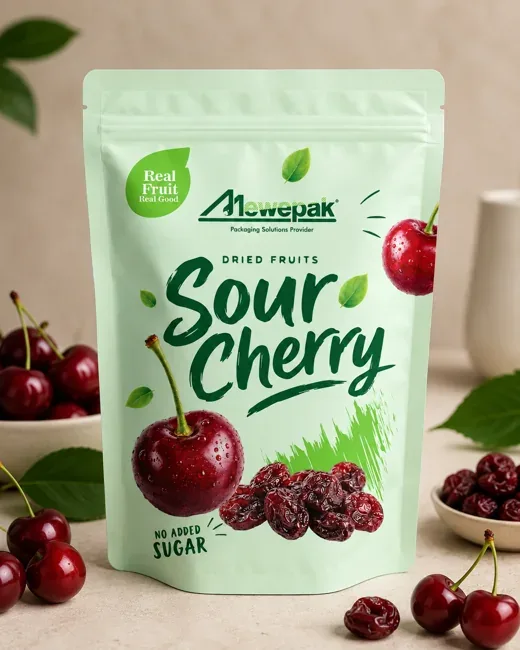
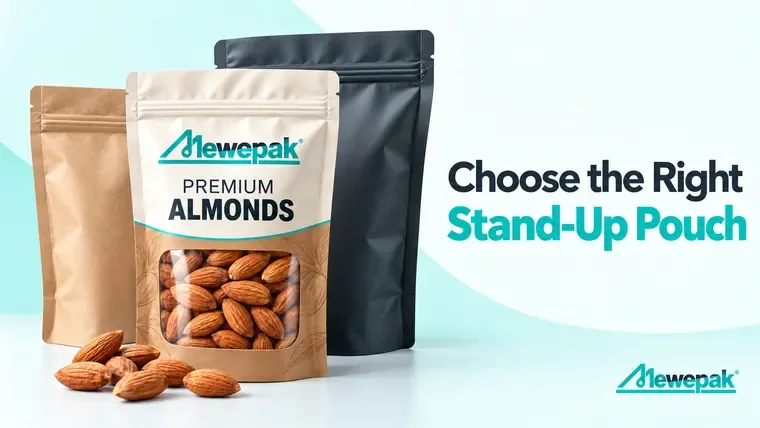
Choose a stand-up pouch that holds the intended portion, runs through filling and sealing, protects the product, and opens as the customer expects. A pouch can look right in a rendering and still be too narrow for the filling nozzle or awkward to scoop from after opening.
Start with a filled sample
Record the net weight and measure the volume it occupies in a trial pouch. Two products with the same weight can need very different bag sizes. Large clusters, powders that settle during transit, and products filled with headspace will each sit differently. Check the width, height, bottom gusset, and clear opening above the product after filling. Stand the bag on a retail shelf or the planned tray to see whether the base opens fully and the front panel stays readable.
Choose a structure for the shelf-life and handling requirements
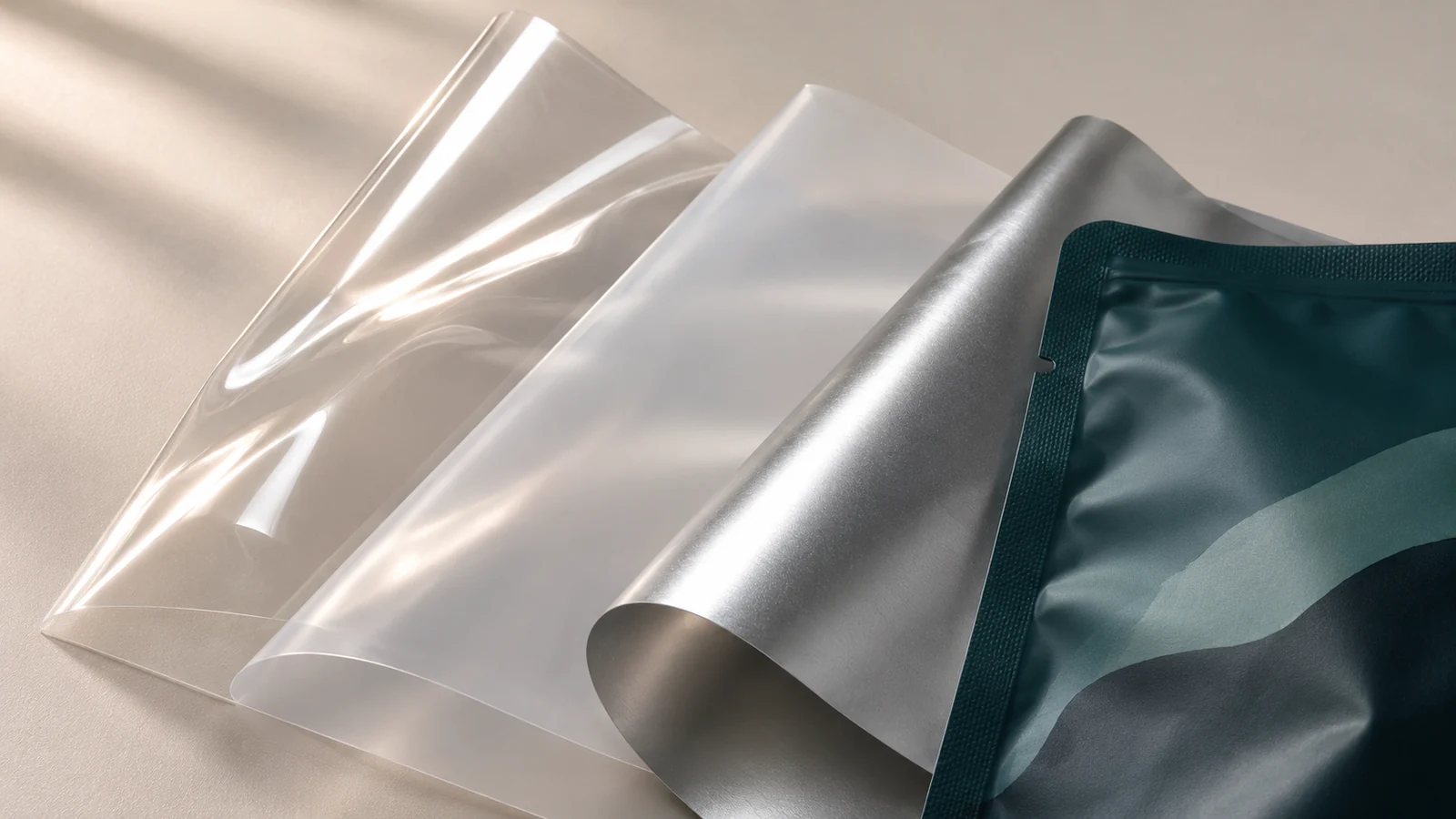
Tell the supplier whether oxygen, moisture, light, or rough handling poses the biggest problem for the product. Include your shelf-life objective and storage conditions, then ask for comparable structures and the test conditions behind their barrier figures. A transparent window can change the material options and should be evaluated as part of the whole pouch. The finished pack also depends on the seals and fitments.
Pick a closure that matches the number of uses
A tear notch can be sufficient for a one-time serving. A zipper helps with repeat use when consumers can open, fill a scoop, and press the zipper closed comfortably. For fine powders, test whether dust in the zipper track makes reclosing difficult. For liquids with a spout, confirm the dispensing behavior and cap handling with the exact product and fitment.
Trial the pouch before artwork sign-off
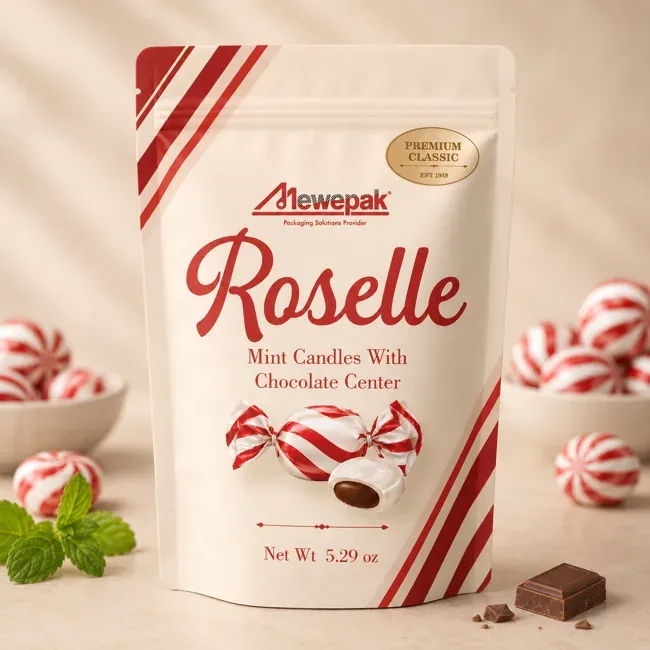
Run samples with the intended filling equipment and inspect the top seal, opening area, and printed panel positions on filled packs. Confirm barcode and date code placement, case count, and how the package fits during transport. If the pouch wrinkles across essential copy, adjust layout or fill dimensions while the design is still easy to change.
Use the 3D preview to check the artwork layout and the stand-up pouch page to compare format options. Carry the results of the filled sample trial into the final specification.