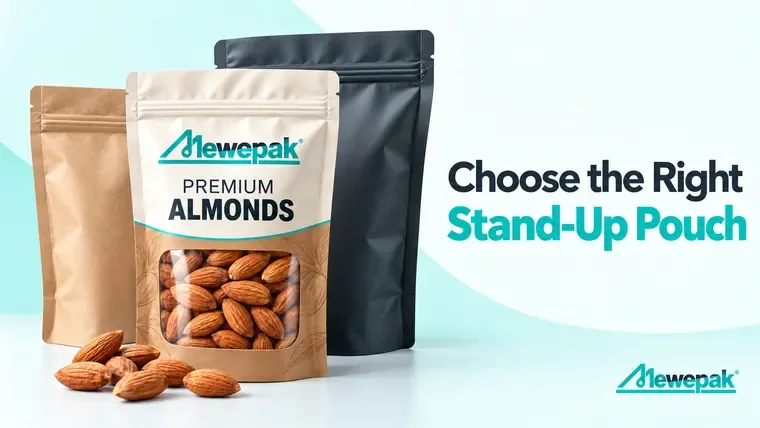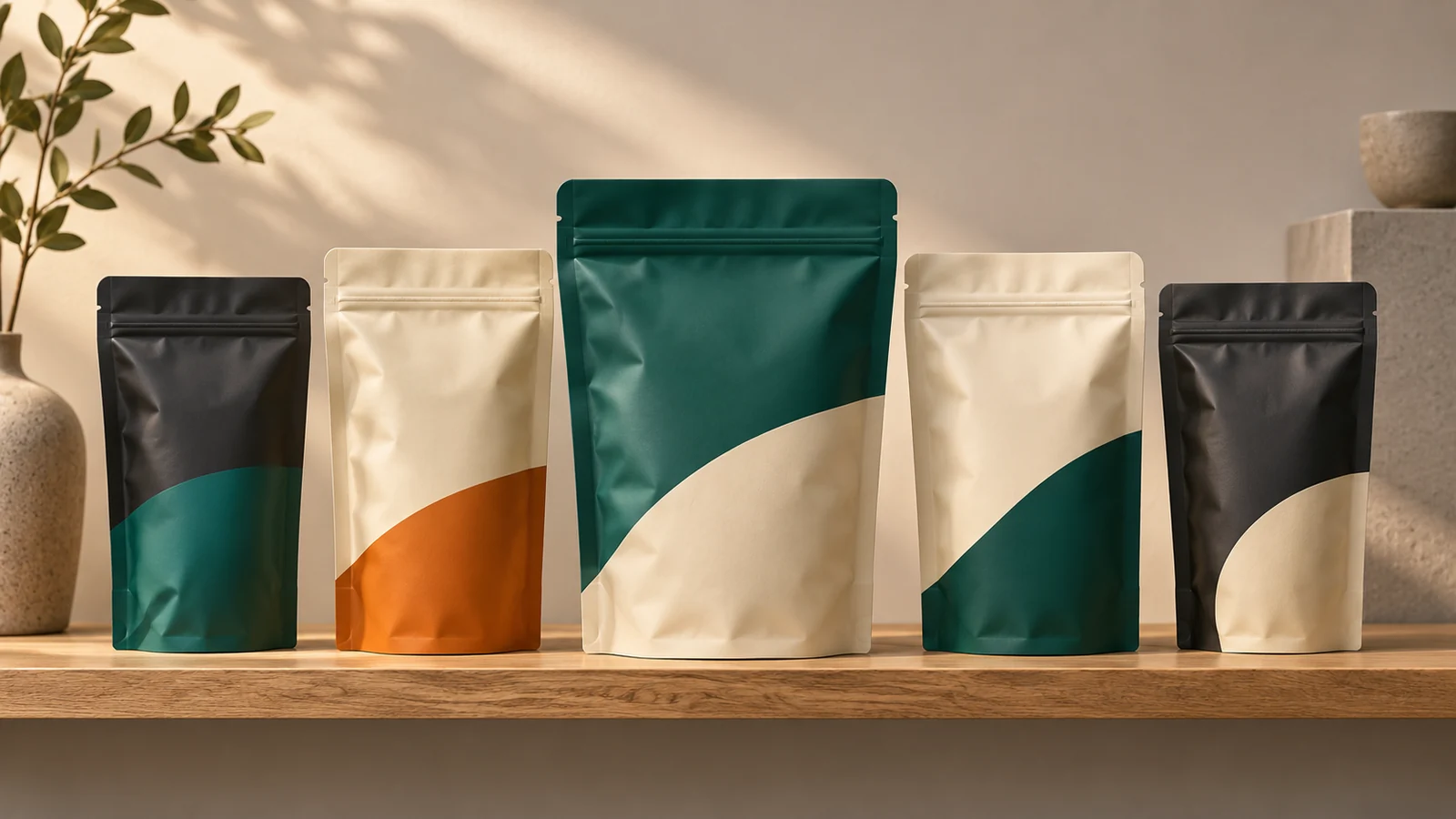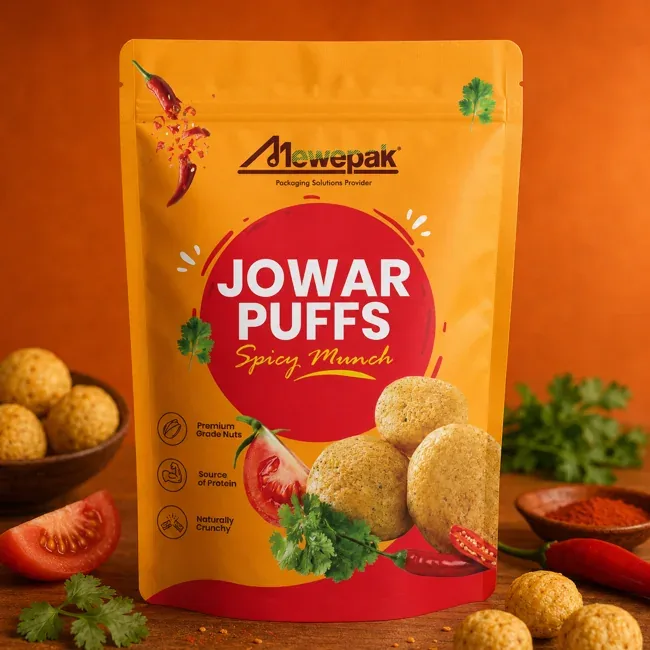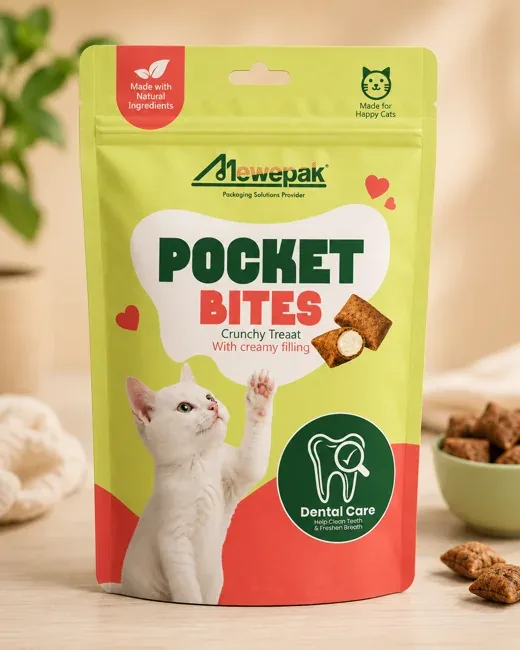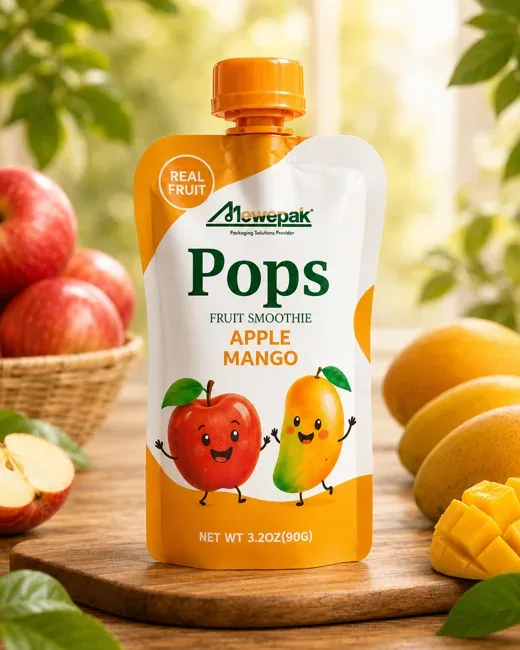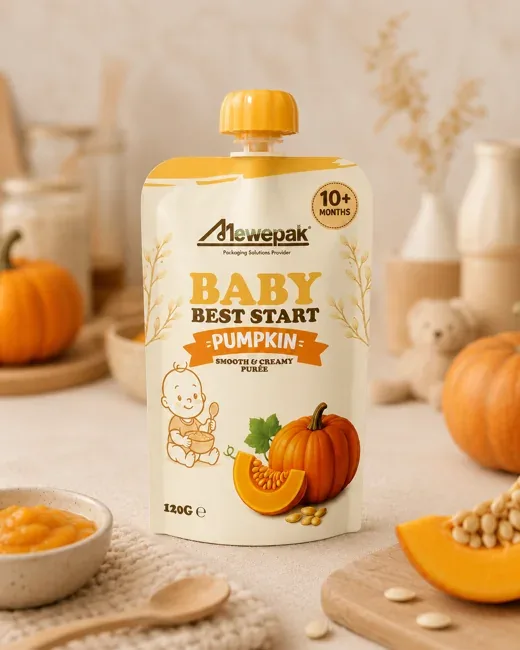
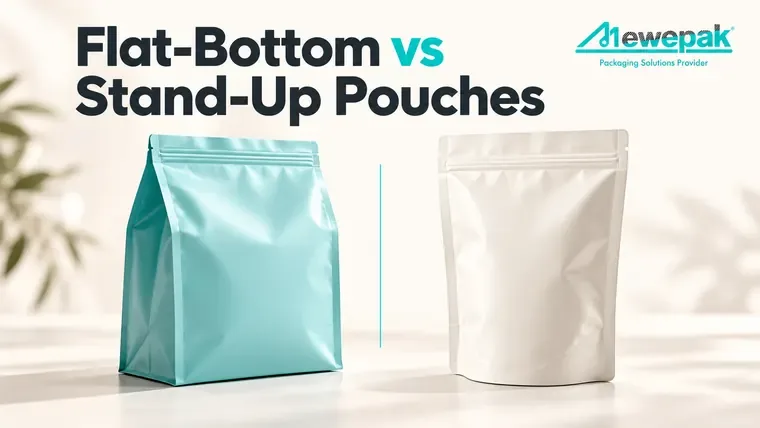
A flat-bottom pouch and a stand-up pouch can both sit upright on a shelf. Their panels, footprint, and filling behavior differ. Compare them with the same product and fill weight so the decision reflects how the formats perform in your business.
The flexible footprint of a stand-up pouch
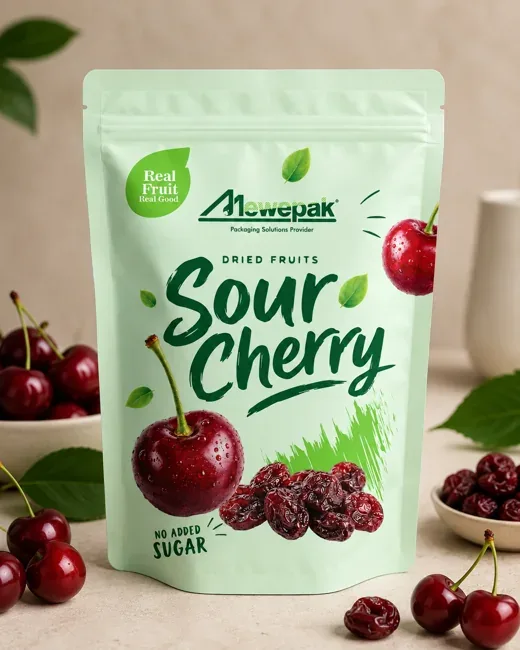
A typical stand-up pouch expands at the bottom gusset as it is filled. Its main artwork lives on the front and back, making it straightforward to separate product identity from preparation and other information. It is worth sampling for snacks, smaller coffee packs, and other products where a simple front-facing shape and easy reclosing matter. For a partially filled pouch, check whether the base opens enough for the pack to stand neatly.
The base and side panels of a flat-bottom pouch
A flat-bottom pouch has a distinct base and side panels. The side panels provide room for color coding or secondary information when a bag is displayed at an angle. The box-like profile is useful to compare for bulkier products, crowded planograms, or packages where a structured silhouette is part of the brand's presentation. Test the actual shelf depth and case count. Side panels and a defined base can change how the pouch sits inside a shipping carton.
Compare the formats on the same four checks
- Fit. Fill both with the same product and compare headspace, overall dimensions, and shelf stability.
- Filling. Confirm opening width, equipment compatibility, and sealing access with the co-packer.
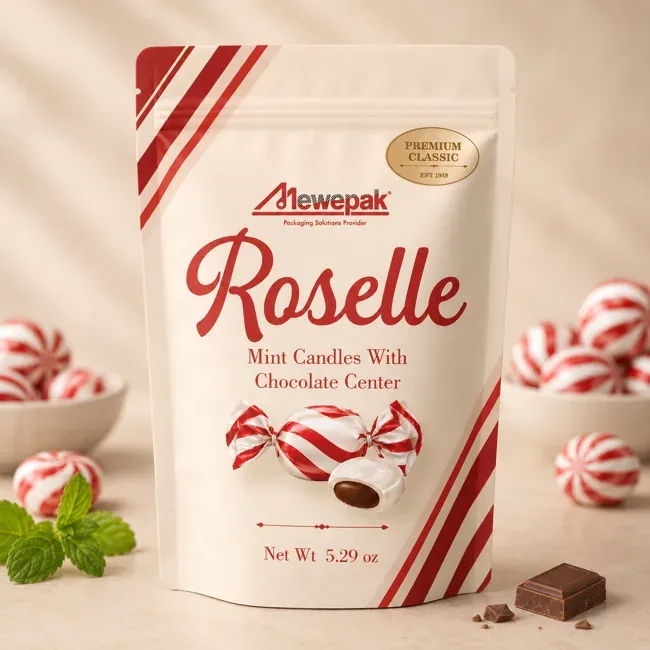
- Artwork. Print physical mockups on the right dielines. Check whether copy crosses seams, gussets, or folds.
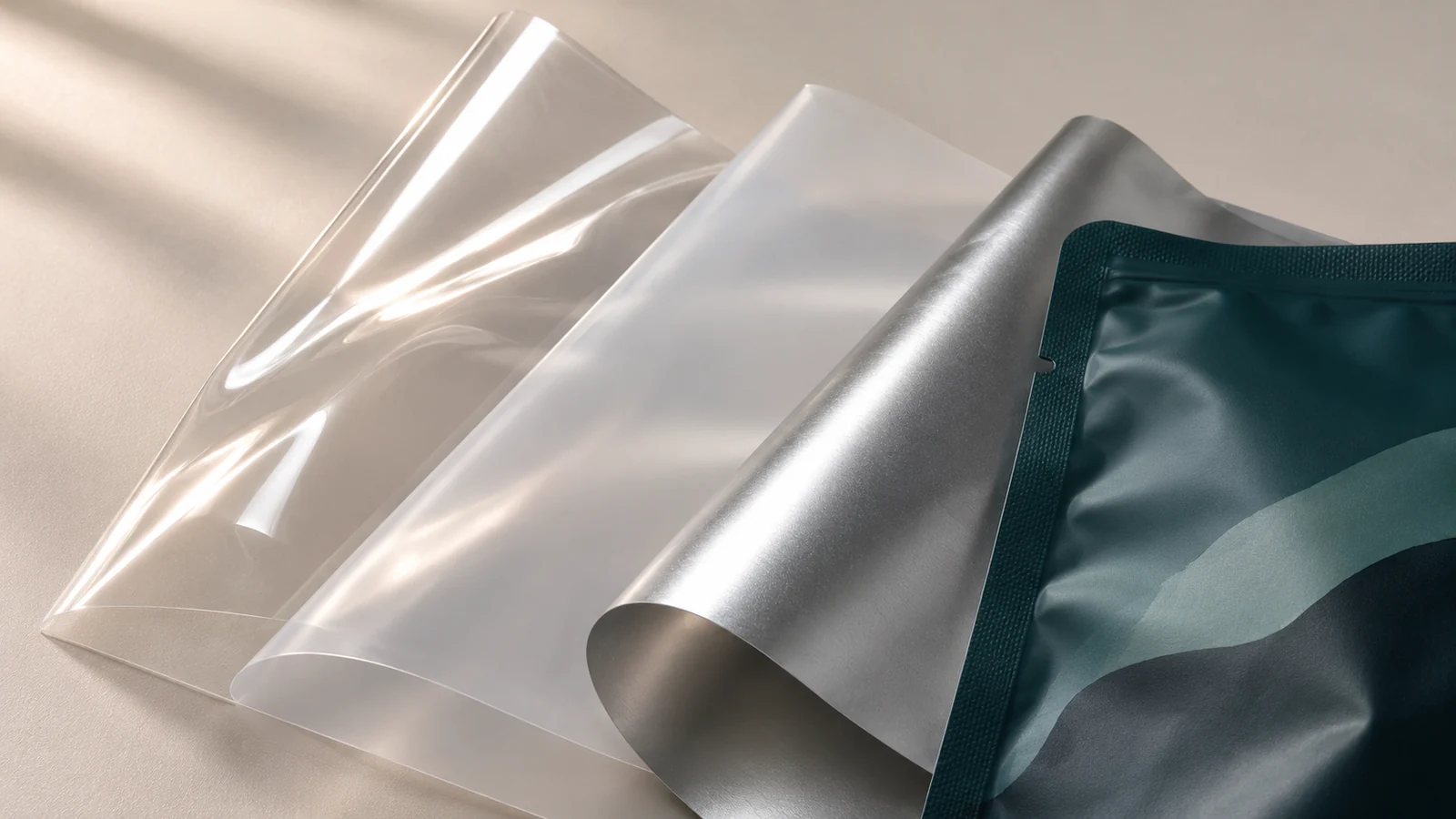
- Total cost. Compare supplier quotes alongside line setup, case pack, and freight requirements. The film structure, closure, and print specification can materially change the comparison.
Choose which trade-off matters for this SKU
If the brand needs side-panel visibility or a box-like profile, start the sample trial with a flat-bottom pouch. If the brief centers on simple front-and-back graphics and a flexible shelf footprint, start with a stand-up pouch. Use the winning sample to lock down the dieline and specifications.