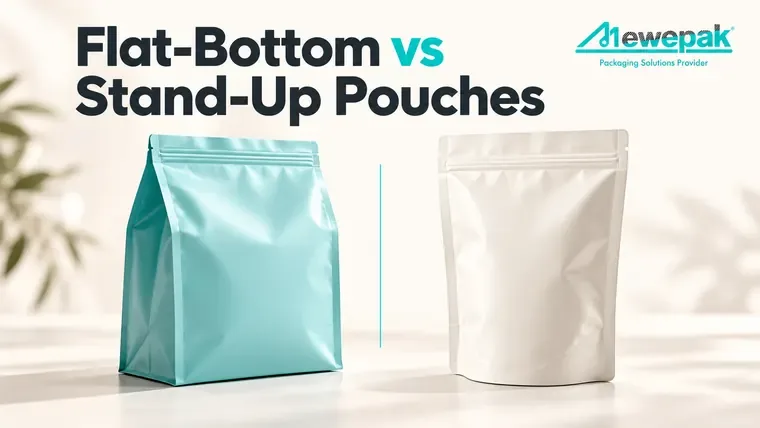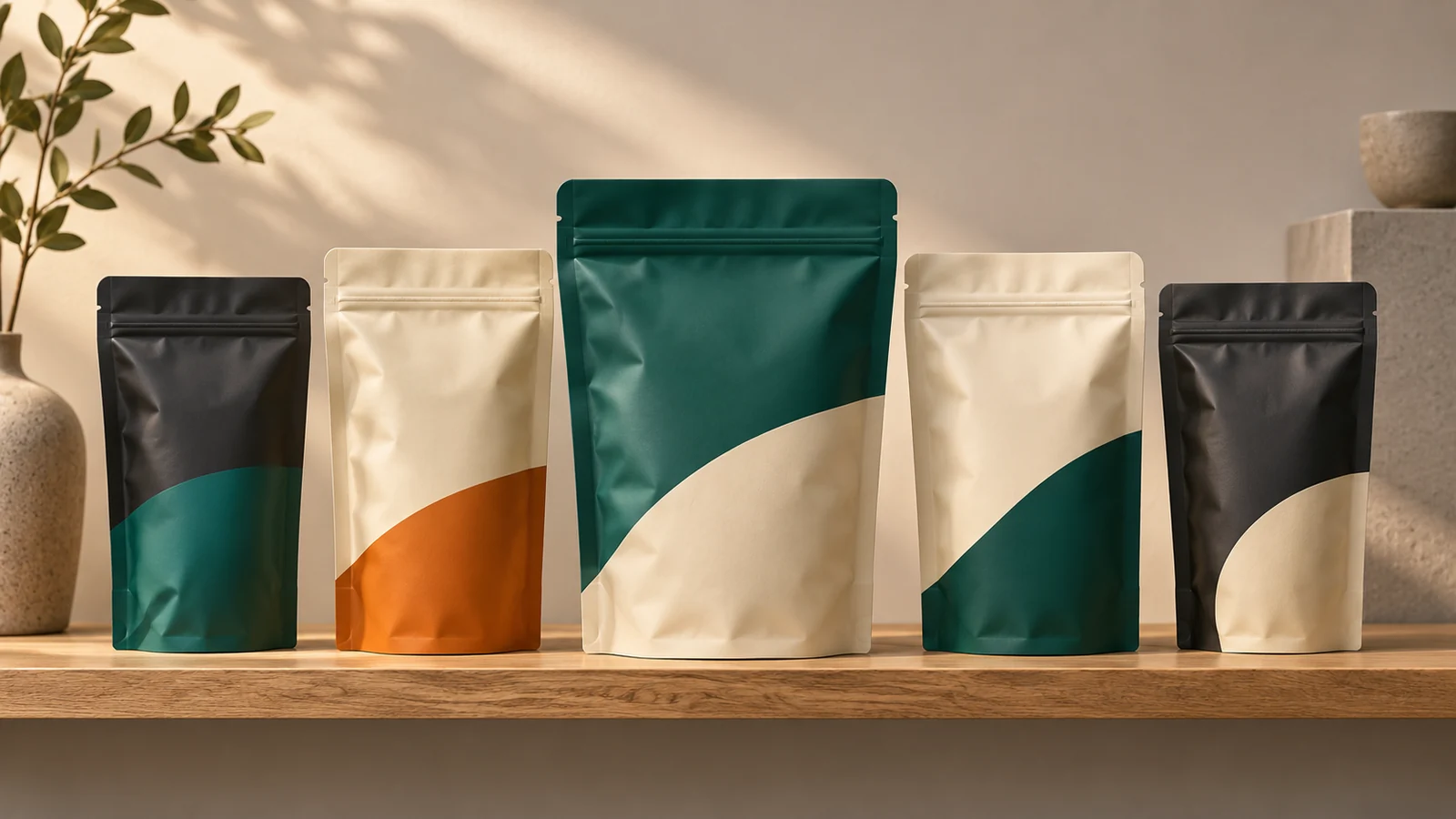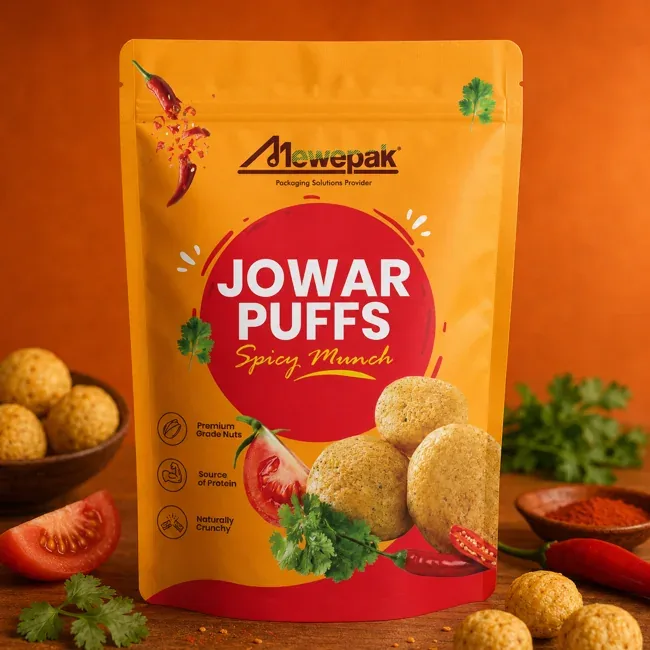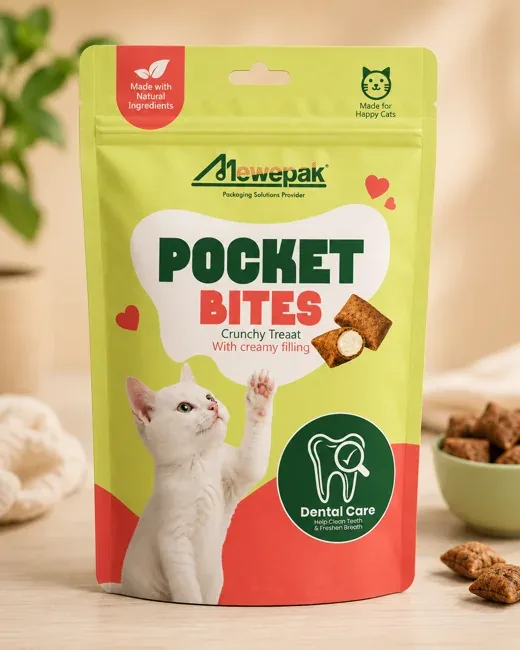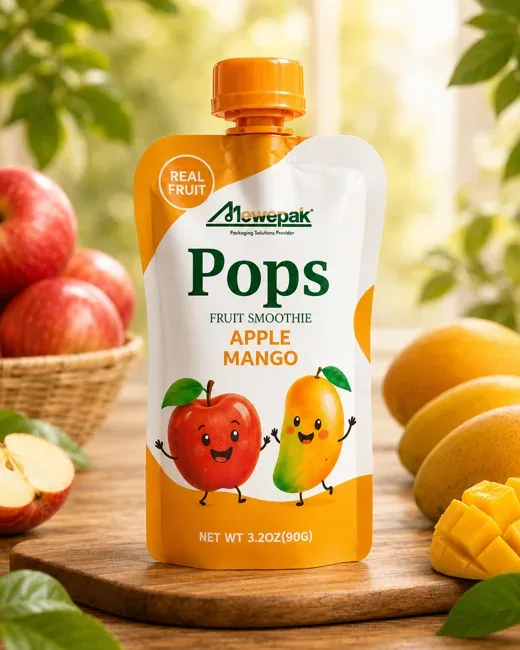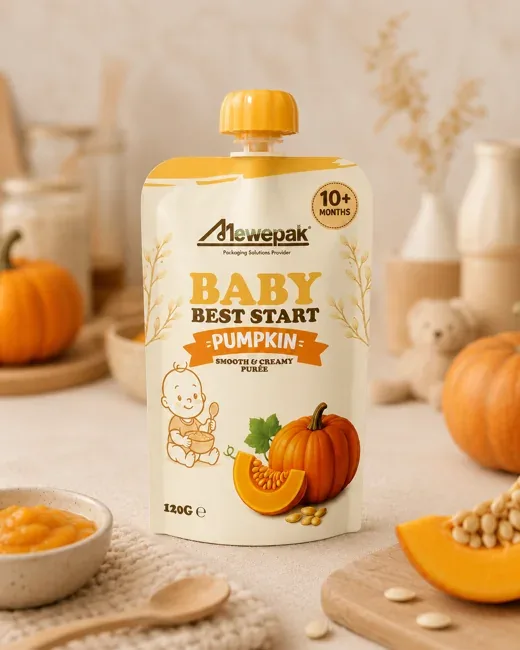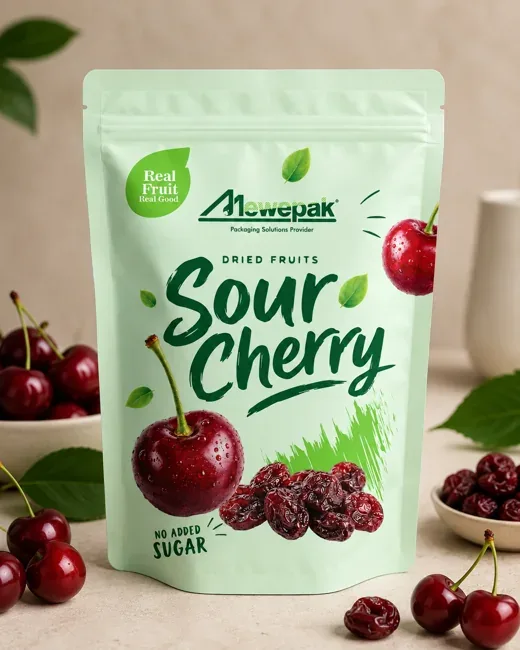
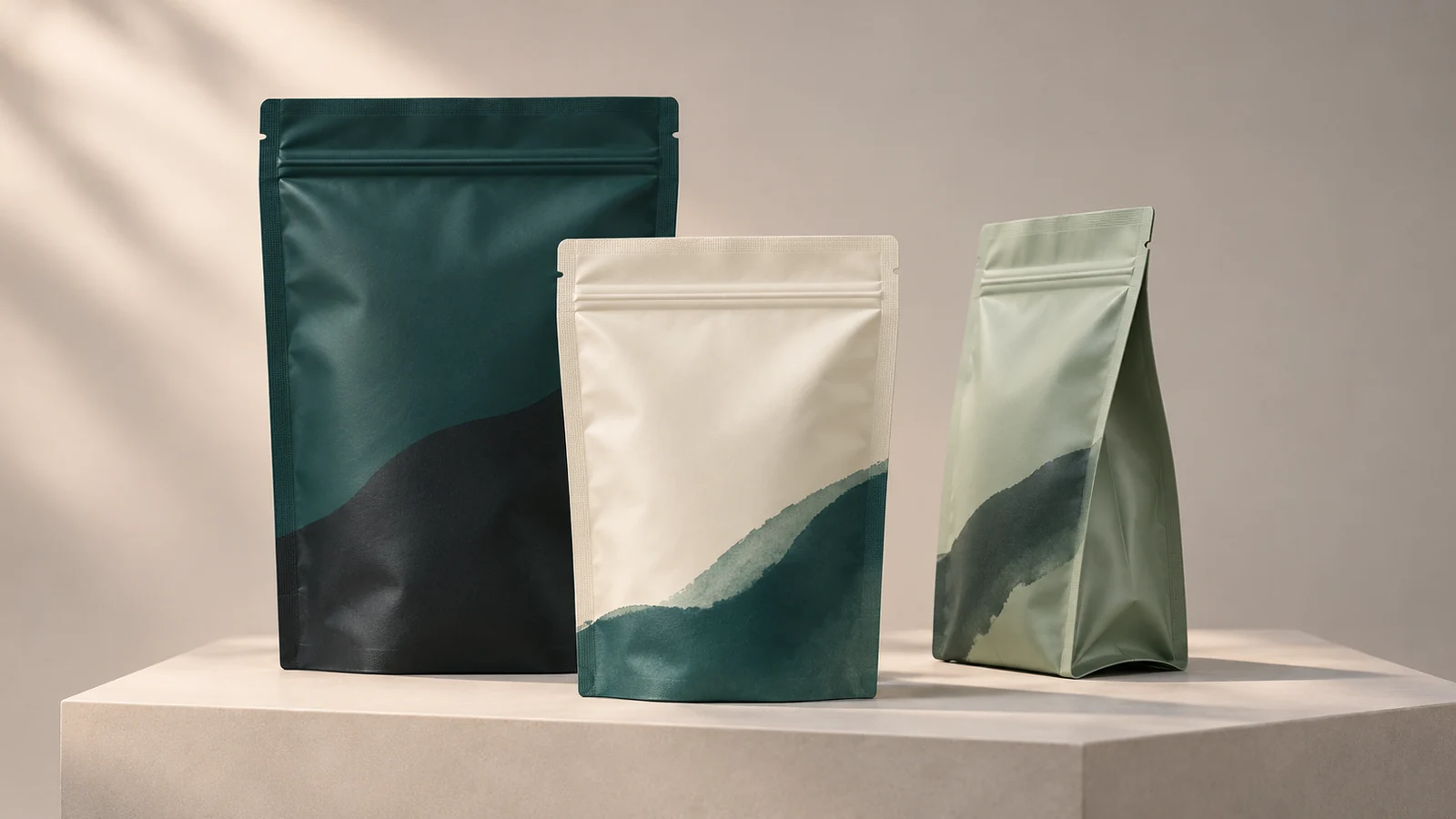
A stand-up pouch uses a bottom gusset to form a base once the pack is filled. The format, film, seal, closure, and artwork all have to work together. The right combination depends on the product and how it reaches the customer.
Know the parts of the pouch
The front and back panels carry the main graphics. The bottom gusset provides depth as the product settles. Side seals and a top seal close the package, while a tear notch can help the customer open it. Options such as a zipper, one-way coffee valve, or hang hole add a specific function. Identify which option solves a real need and check the space its placement takes away from the artwork or fill opening.
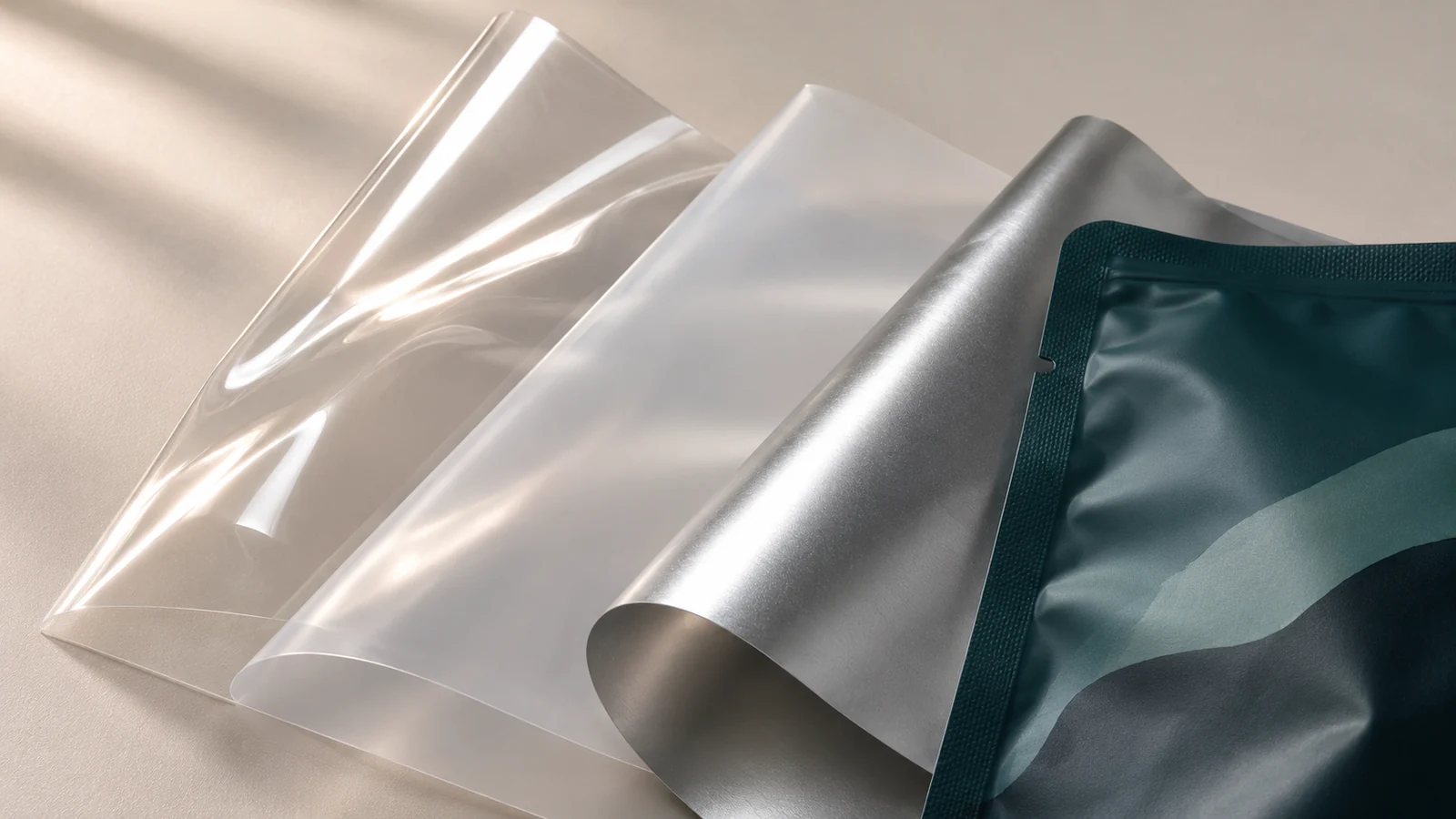
Specify the film by what it needs to protect
A pouch structure can have separate layers for printing, protection, and heat sealing. Explain whether the product is affected mostly by moisture, oxygen, light, puncture, or rough distribution. Ask for candidate film data and check what was measured at which conditions. An opaque film can suit a light-sensitive product, while a window makes the contents visible and changes the protection and artwork discussion.
Prepare artwork on the supplied dieline
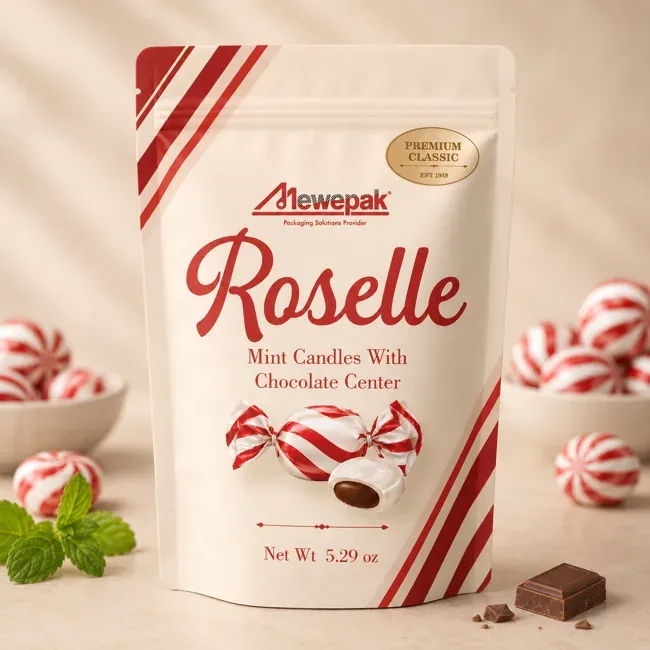
Use the production dieline for the selected pouch size and closure. Keep key graphics and text away from seals, gusset folds, and cut lines. Make sure the lot and date codes have space, and test barcodes on the package after filling. Ask the supplier about print proofing if you use white ink, metallic effects, matte finishes, or a clear window, because those elements can look different on film than they do on screen.
Build a short sample and approval brief
- Give the supplier your product description, fill weight, dimensions from any existing pack, and launch quantity.
- Include filling equipment, storage and distribution conditions, shelf-life objective, and how the pack should be opened or reclosed.
- Agree on the filled sample checks, including shelf fit, top seal, closure, artwork placement, case packing, and code readability.
- Record the approved material, dieline, finish, and physical sample so later reorders can be compared with the same reference.
Explore MeWePak's stand-up pouch formats or use the 3D preview to compare how artwork sits on the pouch before making production proofs.